
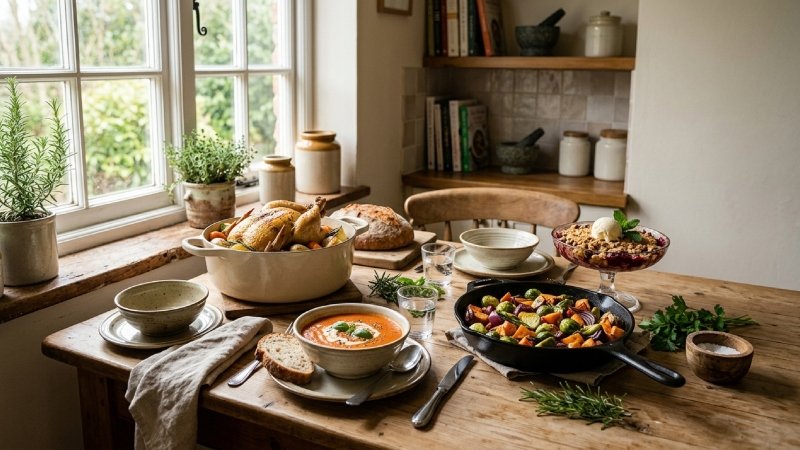
There are recipes that fill your stomach — and then there are recipes that fill something far deeper. The moment a familiar aroma drifts from the kitchen and pulls you twenty years back into your grandmother’s home, you are no longer just eating. You are remembering. That rare intersection of flavor, feeling, and legacy is exactly what the rising culinary term heartumental describes — and in 2026, it is quietly transforming how the world cooks, writes, and passes down recipes.
If you have been searching for recipes heartumental style, this definitive guide covers everything you need: the true meaning behind the term, the science of why food holds memory, a proven step-by-step blueprint for writing your own heartumental recipe, and the smartest ways to protect your family’s dishes for generations to come.
What Does “Heartumental” Really Mean? The Definition Most People Miss
The word heartumental is a fusion of two powerful ideas: heart — representing emotion, nostalgia, and love — and monumental, representing something historically significant and built to last. Some cooks interpret the second half as instrumental or fundamental, emphasizing practical importance. Both readings land on the same truth:
A heartumental recipe serves a practical culinary purpose while carrying deep personal, emotional, and cultural weight.
An ordinary recipe says, “Sauté onions for five minutes.” A heartumental recipe says, “Cook until the onions soften, turn golden at the edges, and your kitchen smells like Sunday at your mother’s house.” One feeds dinner. The other feeds identity. That difference is the reason this movement is exploding.
The Hidden Science: Why Food Locks Memories Better Than Photographs
This is not sentimental guesswork — it is human biology. Your sense of smell is directly wired into the limbic system, the brain’s command center for emotion and memory. That is why a single whiff of simmering cardamom, fresh naan, or slow-cooked chicken soup can resurrect a decades-old moment in vivid detail — faster and more powerfully than any photograph ever could.
Heartumental cooking delivers benefits you can genuinely feel. It creates a mindful flow state that lowers stress and quiets a busy mind. It provides emotional anchoring during grief, illness, and major life transitions. And it builds a sense of belonging, because cooking a dish from your roots is a living declaration of who you are and where you come from.
Why Heartumental Recipes Are Taking Over Kitchens in 2026
People are exhausted by soulless, copy-paste internet recipes — identical ingredient lists with zero story, zero soul, and zero reason to return. The heartumental movement is the rebellion against that emptiness, and it is spreading fast for three undeniable reasons.
First, legacy is disappearing. The greatest family recipes in history were never written down — they lived in the hands and instincts of cooks who measured with memory, and every year thousands of irreplaceable dishes vanish forever. Second, cooking has become self-care. In a high-stress digital age, a slow and meaningful recipe is therapy you can taste. Third, families are hungry for connection — and a dish that demands gathering around one table is worth more than gold.
Ordinary Recipe vs. Heartumental Recipe: The Difference That Changes Everything
| Element | Ordinary Recipe | Heartumental Recipe |
| Purpose | Produce a meal | Preserve a memory and a meal |
| Instructions | Bare steps and timings | Steps plus sensory cues and the “why” |
| Story | None | Personal or cultural backstory |
| Flexibility | Rigid or vague | Guided with creative freedom |
| Legacy | Forgotten after dinner | Written down, shared, inherited |
| Emotional Impact | Low | Deeply personal and repeatable |
The 5 Secret Ingredients Behind Every Unforgettable Heartumental Recipe
They are not salt, fat, acid, and heat. The heartumental framework stands on five pillars that transform an ordinary dish into a family treasure.
First: a story before the steps. Every heartumental recipe opens with context — who made it first, when, and why it matters. Second: precision with permission. Exact measurements paired with clear notes on where improvisation is welcome — structure, but never a cage. Third: sensory landmarks. “Simmer until the sauce coats the spoon and smells sweet and smoky” teaches far more than “cook for 10 minutes,” because it trains your senses instead of your clock.
Fourth: the signature touch. One small, unusual step that makes the recipe unmistakably yours — toasting the spice sixty seconds longer, resting the dough overnight, or a secret squeeze of citrus at the very end. Fifth: a reason to return. The dish should mark an occasion, a season, or a feeling, giving people a reason to cook it again and again. See ONB Meaning Urban Dictionary for more informations.
How to Write Your Own Heartumental Recipe: A 6-Step Blueprint That Works
Step 1 — Choose a dish that means something. Start with a recipe already loaded with feeling: a childhood favorite, a festival dish, or the first meal you ever cooked for someone you love. Emotion is the raw material here.
Step 2 — Write the story first. Before listing a single ingredient, write three to five sentences about the dish. Where did it come from? Who taught you? What does the kitchen feel like when it is ready? This narrative is what separates heartumental content from millions of generic recipes online.
Step 3 — Document with precision. Measure everything — yes, even the things you normally eyeball. Heartumental does not mean vague; it means honoring the dish enough to make it reproducible by anyone who reads it.
Step 4 — Add sensory and emotional cues. Replace cold timings with living descriptions: “Knead until the dough feels as soft as an earlobe” or “Fry until the kitchen smells like Eid morning.” These cues guide cooks who cannot watch over your shoulder.
Step 5 — Mark the moments of freedom. Tell readers exactly where they can safely experiment — swap the herb, adjust the heat, try a different grain. A heartumental recipe invites participation rather than demanding obedience.
Step 6 — Protect it like treasure. Record the cook on video, keep a physical recipe binder for charm, and back everything up digitally. The strongest heartumental recipe cards contain four sections: The Narrative (the backstory), The Technicals (precise measurements), The Sensory Cues (what to see, smell, and hear), and The Variations (how the dish has evolved over time).
7 Dishes Practically Born to Become Heartumental Recipes
Some foods carry emotional weight almost automatically. Slow-cooked biryani or pulao — layered, patient, and tied to celebration. Chicken soup — the universal dish of care and recovery, where one familiar smell can comfort you decades later. Fresh bread or naan — because the aroma alone writes the story. A signature family curry — every household’s version is a fingerprint no one can duplicate.
Then there are holiday desserts like kheer, halwa, pies, and puddings that mark the calendar itself, Sunday roasts and rice platters built entirely around gathering, and pickles and preserves — recipes literally designed to outlast a season, and often a lifetime.
The SEO Advantage Nobody Talks About: Why Heartumental Content Dominates Google
Here is a powerful bonus for food bloggers: the heartumental approach is not just emotionally magnetic — it is a ranking weapon. Search engines reward content built on first-hand experience, original storytelling, and genuine depth. A recipe wrapped in a real human narrative naturally earns longer dwell time, more shares, more saves, and stronger engagement signals than a bare ingredient list ever could. Cooking — and writing — from the heart is not just beautiful. It is brilliant strategy.
Frequently Asked Questions (FAQs)
Q1: What is a heartumental recipe in simple words?
A heartumental recipe is a dish documented with both technical accuracy and emotional storytelling — it teaches you how to cook the food and why the food matters.
Q2: Is “heartumental” a real dictionary word?
No. It is a modern blended term (heart + monumental/instrumental) popularized by food bloggers and online cooking communities to describe emotionally meaningful, purposeful recipes.
Q3: Do I need professional cooking skills to write heartumental recipes?
Not at all. If you can cook a dish and honestly explain why it is special to you, you already have everything you need. Precision plus storytelling is the entire formula.
Q4: Can any dish become a heartumental recipe?
Yes — but dishes tied to memories, traditions, seasons, or gatherings make the strongest candidates because they already carry emotional weight.
Q5: How is a heartumental recipe different from an ordinary family recipe?
A family recipe is often passed down informally and vaguely. A heartumental recipe is a family-style dish properly documented — with exact measurements, sensory cues, and its story — so it survives intact for generations.
Q6: Why do heartumental recipes perform better on Google?
They naturally include original experience, depth, and storytelling — exactly what search engines reward — leading to longer reading time, stronger engagement, and higher rankings.
Final Thoughts: Cook Like It Matters — Because It Truly Does
Recipes heartumental style remind us of something the modern food internet nearly forgot: a recipe is never just a formula. It is a message in a bottle, sent from one kitchen to another — sometimes across decades, sometimes across generations. When you write down a dish with its story, its sensory truth, and its signature soul intact, you are not just teaching someone to cook. You are handing them a piece of your life that they can taste.
So tonight, pick that one dish. The one that means something. Write it the heartumental way. Someone, someday, will thank you for it. Visit Magical Magazine for more details.