
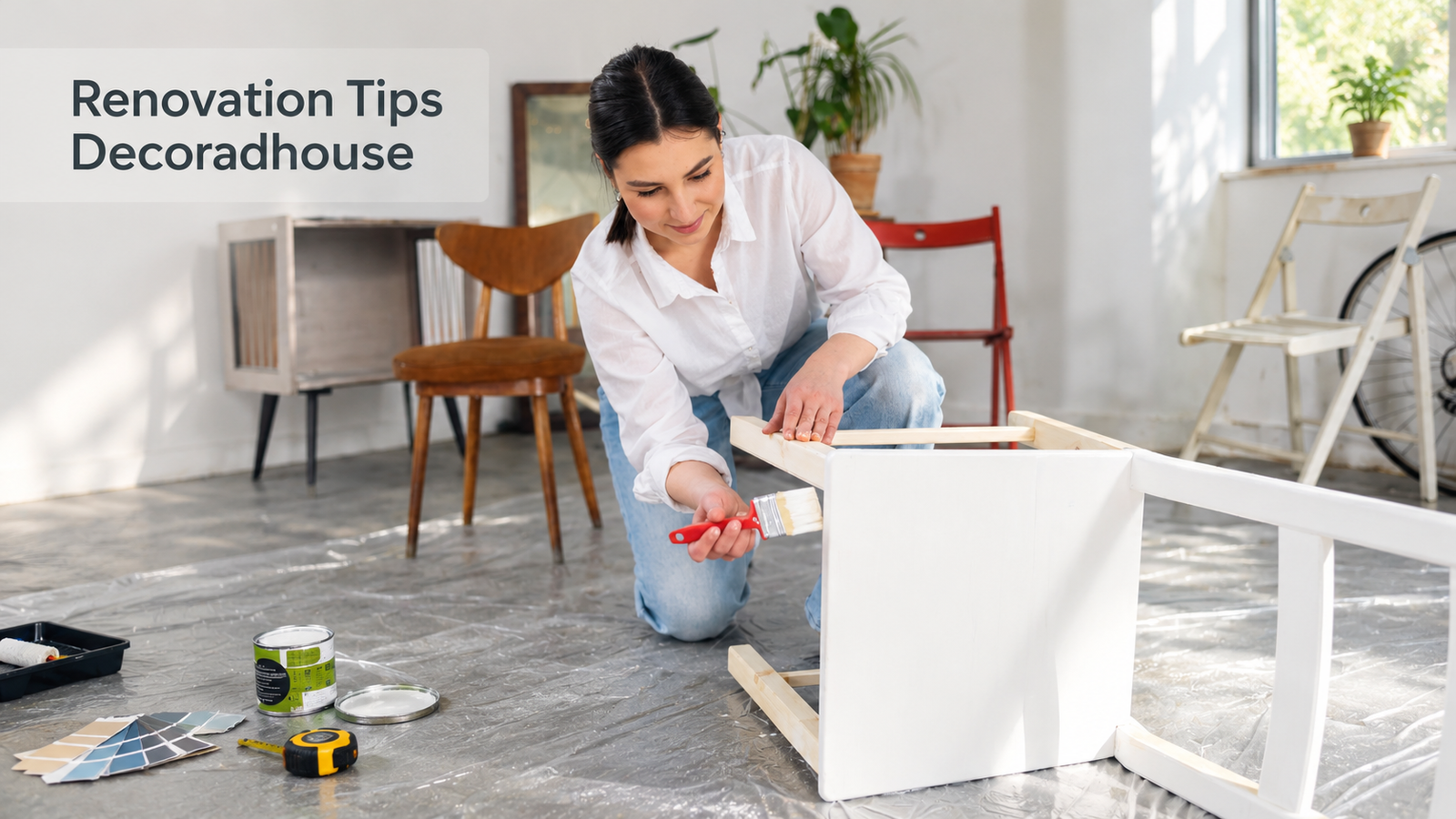
A home renovation improves an existing property’s condition, function, or appearance without necessarily changing its footprint. If you searched for renovation tips decoradhouse, start with one practical rule: fix what threatens the house before changing what you see. A beautiful backsplash cannot compensate for a leaking pipe. This guide offers practical home renovation advice, budgeting estimates, and interior design ideas to help US homeowners improve their living spaces. The goal is not to replace everything; it is to choose improvements that solve daily problems without creating expensive new ones. Renovation Tips Decoradhsoue?
Quick Answer: Renovation tips decoradhouse
Start with leaks, safety issues, and damaged surfaces, then improve paint, lighting, hardware, and storage. Keep working kitchen and bathroom layouts when possible. Decide on your budget, set aside extra funds for unexpected costs, and check local permit rules before beginning the project. Choose DIY only when the task matches your skills and presents manageable risks.
Quick Facts That Keep Small Projects Under Control
A renovation scope is a written description of exactly what a project includes and excludes. Set clear goals before purchasing supplies. Instead of saying “update the guest bedroom,” list specific tasks, such as fixing wall damage, repainting, and changing six cabinet handles. The budget figures below are rough examples of US shopping costs, not nationwide averages or professional contractor estimates.
They assume basic materials and DIY labor where appropriate; local pricing, surface condition, and product quality change totals. Before finalizing your budget, confirm the required quantities, sales tax, delivery fees, and return policies to avoid unexpected expenses. Renovation Tips Decoradhsoue?
| Small project | Illustrative materials allowance | Active work allowance |
| Paint a small room | 100–300 | 1–2 days |
| Replace 10 cabinet pulls | 30–150 | 1–3 hours |
| Add freestanding storage | 75–300 | 2–4 hours |
| Weatherstrip one door | 15–60 | 1–2 hours |
Drying, shopping, repairs, and delivery can extend elapsed time.
Renovation Tips Decoradhouse: 9 Smart Upgrades to Save Money and Reduce Waste
Budget-friendly renovation ideas are targeted changes that improve usefulness or appearance without replacing serviceable features. Begin with a room’s biggest irritation, not its most fashionable product. If kitchen counters disappear beneath appliances, storage may help more than new tile. For affordable home upgrades, repeat finishes intentionally: one cabinet-hardware finish and a restrained paint palette can make separate purchases look coordinated. Test paint on multiple walls and view it throughout the day before committing. These nine priorities move from protecting the building to improving everyday comfort and appearance.
- Repair leaks before covering walls or floors.
- Retain functional layouts in kitchens and bathrooms.
- Repaint sound surfaces after proper preparation.
- Replace hardware using existing hole spacing.
- Improve lighting with suitable lamps and bulbs.
- Add storage where clutter actually accumulates.
- Repair serviceable flooring before replacing it.
- Weatherstrip suitable drafty doors without blocking ventilation.
- Complete one defined project before funding another.
Compare Refreshing and Replacing Before You Commit
A cosmetic refresh changes visible finishes, while remodeling can change layouts, systems, or building components. This distinction helps separate modern home renovation ideas from unnecessarily expensive construction. Painting sound cabinets may suit a style problem; it will not repair crumbling boxes or a dysfunctional layout. Compare choices using the problem solved, disruption, upkeep, and total installed cost rather than the product price alone. Budget-friendly remodeling focuses on keeping existing features that are still in good condition. The right option is the least extensive intervention that reliably fixes the actual problem.
| Existing condition | Lower-disruption option | Consider replacement when |
| Sound cabinets, dated finish | Clean, prepare, repaint | Boxes are failing |
| Dim room, working wiring | Improve bulbs and lamps | New wiring is needed |
| Scratched hardwood | Assess refinishing | Damage is extensive |
| Crowded room | Reconfigure storage | Layout blocks safe use |
Sequence the Work to Protect Your Budget and Time
A renovation sequence is the order in which inspections, repairs, installation, and finishing happen. Start with assessment and permit checks, then necessary repairs, disruptive work, surface preparation, and finishing. Plan flooring and cabinet installation together because product requirements differ. For a weekend refresh, have materials on site beforehand and leave drying time outside your active-work estimate. For instance, if your total budget is $2,000, set aside $1,700 for planned expenses and keep the remaining $300 for unexpected costs. That reserve is a planning choice, not a universal allowance; uncertain conditions may require more.
| Before moving forward | Confirm | Avoid |
| Purchase | Measurements and samples | Guessing quantities |
| Start work | Approvals and repair scope | Covering unresolved damage |
| Hire a contractor | Written scope and insurance | Paying everything upfront |
| Close out | Inspection and punch list | Accepting unfinished details |
Save Money on DIY Projects Without Compromising Safety
DIY suitability is the match between a task’s hazards, required skills, and your ability to complete it safely. Painting an appropriate surface or assembling storage differs from modifying wiring or removing a wall. The EPA advises hiring lead-safe certified contractors for renovations in homes built before 1978, as disturbing old lead-based paint can release dangerous dust. If you suspect asbestos is present, have it professionally assessed before disturbing the material. Confirm permits with your local building department. When hiring contractors, follow FTC recommendations by comparing written quotes, checking required licenses and insurance coverage, and avoiding full payment before work begins.
Renovation Questions That Help You Make Better Decisions
The best renovation choices address a real problem at home with a solution that fits your budget and meets safety standards. These answers address common planning questions, from inexpensive cosmetic changes to choosing professional help. Treat them as starting points rather than permission to bypass product instructions or local rules. Home remodeling ideas are easier to plan when you consider the room, its current condition, your budget limit, and the time available for the project. Before choosing a product or contractor, write down what success looks like: easier cleaning, more storage, safer circulation, or a finish that no longer needs constant repair.
What Are Some Affordable Home Renovation Ideas Under $500?
You can refresh your home on a small budget by painting a room, changing cabinet handles, improving storage, or adding lamps. Include supplies, taxes, and unexpected expenses in your budget.
Which DIY Renovation Projects Are Best for Beginners?
Beginners can start with painting suitable surfaces, assembling storage furniture, or replacing cabinet hardware. Read instructions first and hire a professional for unfamiliar wiring or hazardous materials.
How Can You Improve a Small Home?
Make small spaces more functional with smart storage, suitable furniture, and clear walkways. Measure everything before buying and secure wall-mounted units properly.
How Can You Avoid Renovation Budget Problems?
Set a spending limit, compare prices, and reserve money for unexpected repairs. Confirm contractor fees and additional costs before approving the work.
What Is the Correct Order for Home Remodeling?
Inspect the property first, complete essential repairs, and then move on to installation and finishing. Fix leaks before repairing walls or adding new materials.
When Should You Hire a Professional?
Hire qualified professionals for structural changes, hazardous materials, and complex electrical or plumbing work. Check local permit requirements, insurance, and written estimates.
Do Modern Renovations Increase Resale Value?
Some improvements can attract buyers, but returns depend on the property and local market. Prioritize essential repairs and practical upgrades over expensive personal preferences.
Final Thoughts: Renovation Tips Decoradhsoue
Renovation Tips Decoradhsoue A successful home renovation starts with a clear plan, a realistic budget, and a focus on improvements that make everyday life easier. Before buying materials, identify the problems you want to solve and compare affordable options. Prioritize essential repairs, safety, and functionality before spending money on decorative upgrades. Whether you are refreshing a single room or improving your entire home, take measurements, check installation requirements, and leave room in your budget for unexpected expenses. By making thoughtful decisions and choosing projects that match your skills, you can create a more comfortable, attractive, and practical home without unnecessary spending. Visit Magicalmagazine for more details.