
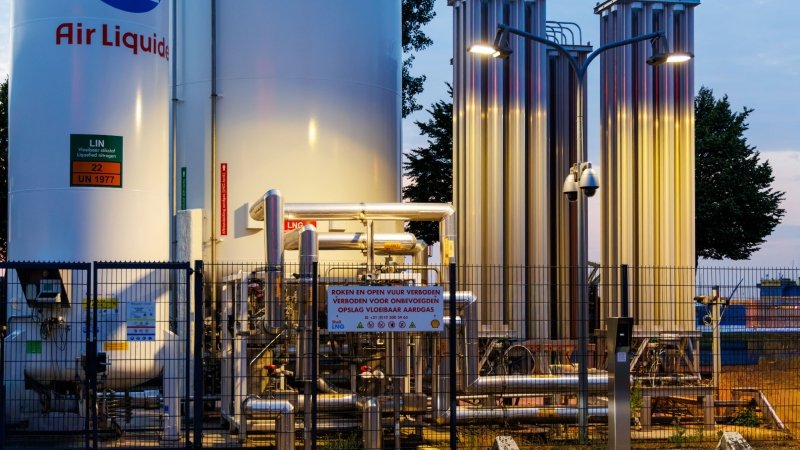
Industrial applications increasingly require extremely low temperatures for the transport, storage, and regasification of gases. A reliable advanced cryogenic system plays a crucial role in this. Whether it involves liquefied natural gas (LNG), nitrogen, oxygen, or hydrogen, these gases cannot be used efficiently and safely without high-quality cooling and storage technologies. But what exactly makes such a system so indispensable for modern industries? And how does well-designed engineering ensure maximum efficiency and optimal safety?
The key components of a cryogenic system
A complete and efficient cryogenic system consists of a set of coordinated components that work together under extremely low temperatures. Key components of these systems include:
- Insulated storage tanks: Special double-walled tanks equipped with vacuum insulation to minimize the warming of the liquid gases.
- Vaporizers: Equipment that converts liquids into a gaseous state in a controlled manner for further distribution. Vacuum-insulated piping: Advanced piping systems that prevent temperature loss during transport between tanks and vaporizers.
- Cryogenic pumps and valves: Components that can withstand extreme cold and ensure precise pressure and flow control.
Every component within a cryogenic system requires customization to meet the specific safety and performance requirements of the application.
Sustainability and safety in a modern cryogenic system
Safety is the top priority when handling cryogenic liquids. Because substances such as liquid nitrogen or cryogenic hydrogen are stored at temperatures far below freezing, a cryogenic system places extremely high demands on material quality and construction. Advanced monitoring sensors and automated safety valves ensure that the pressure in the system always remains within safe limits.
In addition, a well-designed cryogenic system directly contributes to a company’s sustainability goals. Thanks to minimal boil-off losses (boil-off gas) and high thermal efficiency, virtually no energy or raw materials are lost. This not only makes the system safer for the work environment but also significantly reduces long-term operating costs.
Which industries use cryogenic technology?
The applications of cryogenic systems are extremely diverse. In the energy sector, cryogenic technology forms the foundation for the distribution of LNG and the emerging market for green hydrogen. Maritime applications, in turn, make extensive use of cryogenic fuel systems to enable ships to operate more cleanly.
Cryogenic systems are also indispensable in the medical field and the pharmaceutical industry, for example, for the long-term storage of biological samples or packaging under controlled conditions. Even in the metalworking and electronics sectors, precise cryogenic cooling ensures high-quality production results.
Innovation and customization for maximum efficiency
No two industrial processes are identical. That is why cryogenic systems are generally designed entirely to order. An optimal configuration is developed based on the available space, the desired capacity, and the specific type of gas. Using modern engineering techniques, we create a system that integrates seamlessly with existing infrastructure.
Through continuous investment in innovative designs, the technology behind every cryogenic system continues to evolve. This results in even more compact designs, lower maintenance requirements, and a longer service life for all components involved.
Future-proof solutions for cryogenic challenges
The energy transition is accelerating the demand for reliable cryogenic solutions. A future-proof cryogenic system offers the flexibility to scale with changing market needs, such as the transition to cleaner fuels and new gas mixtures. Choosing proven quality and high-performance components is the key to success in this regard.
Would you like more detailed information about how an advanced cryogenic system works and what it can do? Discover how specialized engineering helps create safe, efficient, and sustainable cryogenic installations on the official cryogenic page. Click for more details.