
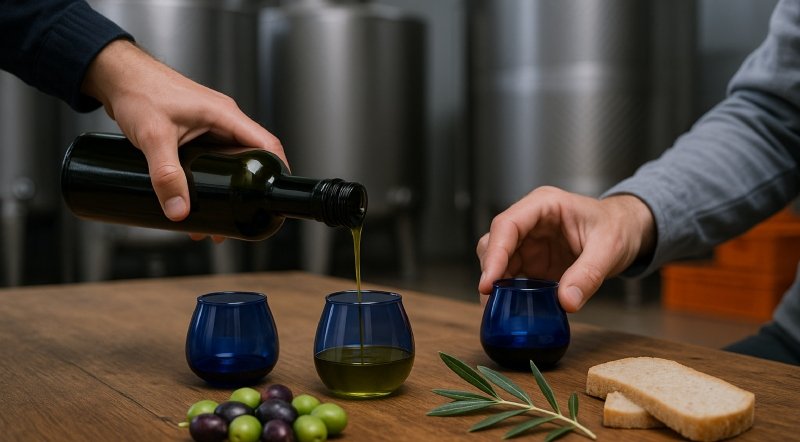
Olive oil tasting in Italy is far more than a simple gastronomic experience. It offers a privileged lens through which to observe how agriculture, landscape, local culture, and experiential tourism intertwine within a complex economic system that is rapidly evolving and increasingly focused on quality and sustainability.
For small and medium-sized agricultural businesses, olive mills, tourism operators, and professionals in the food and wine sector, understanding the dynamics of olive oil tasting means accessing new opportunities for revenue, territorial brand positioning, and direct relationships with Italian and international visitors who are becoming increasingly attentive to traceability and the stories behind the products they bring to the table.
Scenario: how extra virgin olive oil became a cultural experience
The role of guided tastings and platforms such as loveoliveoil.it
Tasting extra virgin olive oil is not as intuitive as tasting wine or cheese. It requires at least some technical guidance to become truly meaningful. The use of dark tasting glasses, serving temperature, olfactory sequence, sensory analysis of bitterness and pungency, and understanding defects all transform a simple tasting into an educational and cultural experience.
In this context, specialized platforms such as loveoliveoil.it play an important connecting role between supply and demand. On one side are travelers interested in authentic olive-oil-related experiences; on the other are small producers and agricultural businesses that often lack advanced digital marketing tools but possess extraordinary know-how, local varieties, and family stories. The intermediation is not merely commercial but also cultural: it educates consumers, structures the visitor offering, and makes experiences that would otherwise remain fragmented and invisible easier to compare and discover.
For agricultural businesses and rural hospitality SMEs, guided olive oil tastings are now among the most flexible and replicable formats available. They can be integrated into olive mill tours, included within mixed day tours combining olive oil, wine, villages, and archaeological sites, or become the centerpiece of workshops and mini-training courses for amateur chefs and food enthusiasts. The key lies in building a coherent narrative that connects the trees, the landscape, harvesting techniques, and the sensory profile of the oil in the final dish.
Data and statistics: the economic and tourism dimension of olive oil in Italy
Olive oil tasting experiences are becoming increasingly important in both the food and tourism sectors. Italy produces hundreds of thousands of tons of olive oil each year and is known worldwide for its premium quality, strong exports, and long-standing traditions. Although Spain leads in production volume, Italy stands out for the higher value of its products.
Food and wine tourism in Italy generates billions of euros annually through hospitality, restaurants, tours, and local product sales. A growing part of this market is linked to extra virgin olive oil, supported by global interest in healthy diets, natural products, and authentic regional experiences.
Major olive oil regions such as Puglia, Tuscany, Sicily, Calabria, and Lazio are also popular tourist destinations. In Puglia, visits to ancient olive groves and traditional masserie have become a key part of tourism. In Tuscany, wine and olive oil tours through areas like Chianti and Maremma offer visitors complete cultural and culinary experiences.
Research also shows that many travelers are willing to spend more on personalized tours, small-group activities, and direct contact with producers. Olive oil tastings fit perfectly into this trend because most people use olive oil daily but know little about its sensory qualities or production methods.
Another important factor is growing consumer attention to traceability and food authenticity. Olive oil has historically faced issues related to adulteration and fraud. As a result, certifications, stricter controls, and transparent communication have become more important. Guided tastings allow producers to explain quality differences directly to consumers, helping visitors better understand what makes a true extra virgin olive oil unique.
Risks and challenges if tasting is not valued as a cultural and economic tool
Failing to invest in olive oil tasting as a tool for education and direct engagement with visitors carries several risks for businesses and territories. The first is the commodification of the product. If olive oil continues to be perceived as an undifferentiated commodity, competition shifts almost entirely to price, penalizing businesses that invest in native cultivars, early harvesting, cold extraction, and sustainable agricultural practices, all of which involve structurally higher costs.
A second risk concerns the growing disconnect between cities and rural areas. Without opportunities for interaction in farms, olive mills, and olive groves, many citizens and tourists continue to view agriculture merely as a postcard image, without understanding the complexity of a sector dealing with volatile international prices, climate change, plant diseases such as Xylella, and strict regulatory constraints. Guided tastings integrated into farm visits are among the few opportunities to explain these structural challenges in accessible language.
For small and medium-sized agricultural businesses, neglecting the experiential dimension also means giving up a potentially important complementary source of income. Margins from direct sales of bottled olive oil are generally higher than wholesale sales, but often insufficient on their own to guarantee the economic sustainability of family-run operations. Combining product sales with the added value of guided visits, tastings, and workshops enables businesses to diversify risk and stabilize cash flow, especially during periods of unfavorable wholesale prices.
From a reputational perspective, territories that fail to invest in showcasing their olive-growing heritage risk being perceived as less distinctive than increasingly aggressive international competitors such as Greece, Portugal, or certain non-European countries that strongly promote the connection between olive oil, landscape, and well-being. In a competitive tourism market, the absence of a structured olive oil tasting offering can gradually translate into a loss of attractiveness.
Opportunities and benefits: from economic value to educational value
When properly designed, extra virgin olive oil tastings offer benefits that go far beyond increasing revenue. For businesses, the most obvious advantage is the ability to position themselves within higher value-added market segments. An olive oil that is explained, contextualized, and tasted with the support of a producer or expert becomes a product with a story, and that story helps justify a higher price, provided it aligns with genuine quality.
From an educational standpoint, guided tastings help bridge a widespread knowledge gap. Many consumers cannot distinguish between virgin and extra virgin olive oil, nor correctly interpret terms such as “cold pressed,” “acidity,” “blend,” or “single cultivar.” Through practical examples, comparisons between oils from different origins, and explanations of harvesting and production methods, visitors can develop critical tools that improve purchasing decisions and encourage more informed demand for quality.
Another advantage lies in strengthening the identity bond between local communities and olive groves. In many areas of southern and central Italy, centuries-old olive trees are an integral part of the cultural landscape. Enhancing their value not merely as productive assets but as “living memories” of agricultural civilization helps combat rural abandonment and the loss of traditional knowledge. Young people who participate in tastings and sensory education workshops may develop a concrete interest in careers connected to agrifood, wine tourism, or food communication.
From a tourism-services perspective, integrating olive oil tasting into experiential packages also helps partially reduce seasonality. Harvesting and pressing activities are concentrated in autumn, but tastings, olive mill visits, and olive grove tours can be offered throughout much of the year, especially in regions with mild climates. This contributes to distributing tourism more evenly across accommodation facilities, restaurants, and local services, creating more balanced socio-economic benefits.
Regulations, certified quality, and consumer protection
Olive oil tasting cannot be separated from at least a basic understanding of the regulatory framework governing the production, labeling, and promotion of extra virgin olive oil in Italy and across the European Union. Unlike less regulated products, olive oil is subject to strict chemical and sensory standards defined both at EU level and through specific PDO and PGI production rules.
The “extra virgin olive oil” category is reserved for oils obtained exclusively through mechanical processes, with precise requirements regarding maximum free acidity and the absence of significant sensory defects in official tasting tests. Panel tests conducted by trained professional tasters according to recognized protocols play a central role in ensuring that products labeled as extra virgin genuinely meet the category requirements.
For Protected Designation of Origin (PDO) and Protected Geographical Indication (PGI) products, an additional level of regulation applies through production specifications defining geographic area, permitted varieties, cultivation and processing techniques, and minimum analytical and sensory parameters. When properly explained during tastings, this regulatory framework becomes both a reassurance factor for consumers and a differentiation tool for producers.
There is also legislation regarding labeling transparency, governing the indication of olive origin, blends of oils from different countries, and optional terms such as “hand-picked” or “cold extracted,” which cannot be used misleadingly. During technical tastings, clarifying these aspects is essential for building trust and avoiding promises that do not align with legal requirements.
Finally, food safety and civil liability connected to on-site hospitality must also be considered. Businesses organizing visits and tastings must comply with hygiene and food-service regulations, facility management requirements, and internal traceability standards for the products served. Proper management of these aspects protects both guests and businesses while enhancing the professional image of the sector.
Practical guidelines for farms, olive mills, and tourism operators
Farms, olive mills, and tourism businesses can improve olive oil tasting experiences by following simple and professional strategies. A well-organized approach creates a better impression on visitors and increases trust.
Basic tasting training is very important. Even small businesses should have someone who can explain fruity aromas, bitterness, pungency, and common defects in simple language. Short professional courses can greatly improve the quality of the experience.
Tours should also follow a clear structure. Visitors should move smoothly through olive groves, production areas, and tasting sessions without confusion. The focus should remain on olive varieties, harvest seasons, freshness, and understanding olive oil labels.
Small details during tastings matter. Businesses should provide clean glasses, water, and neutral foods like bread or apples to cleanse the palate. Oils should be served in the correct order, starting with lighter flavors and moving to stronger ones. These simple steps make the tasting feel more professional.
Tourism operators should coordinate carefully with farms and olive mills. Good planning helps with scheduling, transportation, language support, and visitor safety. This is especially important for families, children, or guests with special needs.
Marketing should stay honest and authentic. Businesses should avoid exaggerated stories and focus on real traditions, local history, and seasonal production. Being transparent about yearly differences in flavor and production makes the experience more credible and memorable for visitors.
Implications for citizens, restaurants, and restaurateurs
Olive oil tasting concerns not only farms and tourists. It also has significant implications for citizens and the restaurant industry. For end consumers, participating in a guided tasting can permanently change purchasing habits: the willingness to recognize the value of high-quality extra virgin olive oil — often more expensive than anonymous supermarket products — increases substantially after directly experiencing sensory differences and understanding the complexity of the work required to produce it.
For restaurateurs and chefs, extra virgin olive oil is a fundamental tool for defining culinary identity. Integrating a curated “olive oil list” alongside wine lists, perhaps linked to producers with whom direct relationships have been developed through tastings and visits, enables restaurants to build gastronomic offerings that align with their philosophy. Olive oil is no longer just a basic ingredient but a narrative element capable of telling stories about territories, harvest years, and cultivars.
From a public-health perspective, spreading a culture of high-quality olive oil fits within broader strategies promoting balanced dietary habits. Numerous epidemiological studies referenced by international health organizations link regular consumption of extra virgin olive oil within a varied diet to reduced risks of certain cardiovascular and metabolic diseases. Greater awareness of the product and its characteristics may therefore also contribute to improving everyday nutritional choices.
FAQ: frequently asked questions about olive oil tasting in Italy
How long does an olive oil tasting experience in Italy usually last?
A guided olive oil tasting typically lasts between 45 minutes and two hours, depending on whether it is limited to a tasting session or integrated into a broader visit that includes the olive grove and olive mill. For international tourist groups, formats of around one and a half hours are common, allowing enough time for technical explanations, comparative tastings, and interaction with visitors.
What is the best time of year to participate in an olive oil tasting in Italy?
Tastings are possible year-round, but autumn and early winter — coinciding with the harvest and pressing season — offer special added value because visitors can observe production stages up close and taste freshly pressed oils. In spring and summer, the focus shifts more toward the landscape experience, with olive groves in full vegetation and ideal weather conditions for outdoor activities.
Is specific training required to conduct professional olive oil tastings?
To conduct entry-level tastings aimed at non-specialist visitors, focused but relatively short training is sufficient. Courses lasting just a few days or field-training modules with experienced tasters can provide the essential skills. Professional sensory analysis activities, by contrast, require more structured pathways, participation in recognized tasting panels, and continuous practice according to standardized protocols.
Conclusions: olive oil as a bridge between countryside, cities, and travelers
Olive oil tasting in Italy today represents one of the most fertile areas of integration between quality agriculture, experiential tourism, food education, and the enhancement of cultural heritage. It is not simply about adding another “attraction” to the tourism catalog, but about recognizing extra virgin olive oil as a language through which to tell an essential part of Italian identity — from the Tuscan hills to the countryside of Puglia, from the inland villages of Lazio to the coasts of Sicily.
For agricultural businesses, olive mills, restaurateurs, and tourism operators, the challenge lies in designing experiences that are coherent, technically accurate, and emotionally engaging, where direct contact between visitors and producers becomes the real added value. For citizens and travelers, participating in a well-conducted olive oil tasting is a way to gain critical tools, make more informed purchasing decisions, and understand the impact that every bottle of olive oil has on landscapes, families, and communities.
Within this intersection of economic, cultural, and social interests, extra virgin olive oil confirms itself not only as a cornerstone of the Mediterranean diet, but also as a powerful mediator between worlds that too often communicate too little: countryside and city, producers and tourists, tradition and innovation in the way food is experienced and narrated. For more details, Click here